Service potholing
Physically confirm the location and depth of underground assets at critical points before drilling or excavation.

Hydro Excavation
Pressurised water and vacuum recovery for potholing, service exposure and excavation around existing underground infrastructure.
Non-destructive digging
Hydro excavation removes material without placing steel teeth directly beside the service you are trying not to damage.
It is suited to potholing, daylighting, exposing utility crossings, confined excavation and support work around fibre, power, gas, water and drainage assets.
It reduces the need for mechanical excavation close to services. It does not remove the need for locating, planning or competent operation.
Where it earns its keep
Physically confirm the location and depth of underground assets at critical points before drilling or excavation.
Expose sections of existing infrastructure for inspection, connection, repair planning or safe work around it.
Daylight crossing services and confirm the available corridor before the drill head reaches them.
Remove material where a conventional excavator is too large, too blunt or would create unnecessary surface damage.
Controlled excavation in service-dense ground where the hole location matters and unknowns need to be managed.
Entry and exit excavation, slurry recovery and practical support around directional-drilling operations.
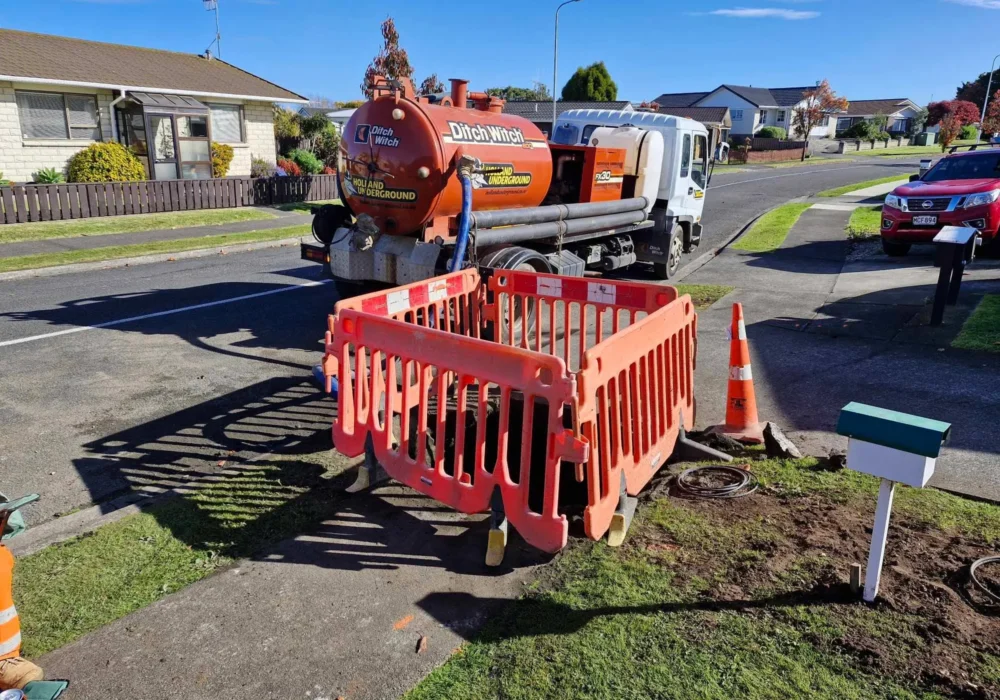
Ditch Witch FX30
Our FX30 hydro excavation unit supports potholing, utility exposure, slurry recovery and drilling work from the same practical operation.
That means the crew exposing the service understands why it is being exposed and what the drilling or civil team needs to do next.
Less handballing. Fewer explanations. More progress.
The process
Use plans and site information to understand known services and likely congestion.
Locate conductive assets where practical and mark the proposed excavation area.
Use water and vacuum recovery to remove material and identify what is actually there.
Measure, mark and plan the next stage around the physical service, not just the drawing.
Hydro excavation reduces risk.
It does not make underground services indestructible or replace judgement.Holland Underground
Send the site location, what needs to be exposed and when the next crew needs the information.